
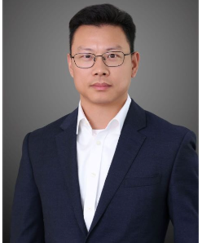
Biography:
Shi Yin (born in 1988), professor at USTC’s School of Nuclear Science and Technology, received his bachelor’s from HUST (2010) and PhD from SIOM, CAS (2015), winning the CAS President’s Special Award. He was assistant researcher, SIOM; Newton Fellow, Imperial College London; and postdoc, UC San Diego, focusing on intense vortex laser-plasma interactions and associated OAM effects. His 35 published papers include four first-author papers (Phys. Rev. Lett.) and an invited review (Sci. China Phys. Mech. Astron.), and he serves on the editorial board of Laser and Particle Beams.
Research:
Our group provides education and training in the areas of high-power laser plasmas, high-field lasers, and high-energy-density physics. Our work includes theory and simulation studies, as well as collaborations with other groups on diagnostics and experiments. We are interested in controlling the generation and evolution of plasma using a structured laser. We focus our work on electron and photon acceleration, as well as the self-generation or magnification of the B field in laser-plasma interactions. Fundamentally, we aim to harness the energy and intensity of a high-power laser beam with a mid-infrared wavelength to accelerate particle beams and transfer that energy and intensity to particle beams or EM radiation with different wavelengths. Our goal is to accelerate the realization of controlled fusion energy for humanity. Throughout this process, we have developed a strong interest in industrial and medical applications. We have our own taste regarding good scientific ideas and important proof-of-principle experiments.
What You Can Expect in the Project:
We offer short-term research projects for students, focusing on theoretical analysis, simulations, and code development for laser-plasma interactions and laser-driven controllable fusion. Topics include:
(1) Ultrashort intense laser pulse interaction with plasma,
(2) Helical plasma waves carrying orbital angular momentum,
(3) Orbital angular momentum radiation from relativistic electron beams,
(4) Development of the Parallel code SymPIC on high-performance computers,
(5) Theoretical and simulation-based spatiotemporal characterization of ultrashort laser beams.
Cross-disciplinary topics are also available, e.g., Bayesian methods in plasma physics. Applicants are invited to participate in a joint USTC–PoliTo summer school on plasma physics, which will take place during the final two weeks of the FuSEP program.
Desired Skill and Background:
We welcome applicants who are open-minded, self-motivated, and passionate about science. Candidates with a background in plasma physics, electromagnetics (or general physics), optics, and computer programming (Python, C++) are encouraged to apply, especially those interested in laser-plasma interactions, controllable fusion, or frontier research in general.